
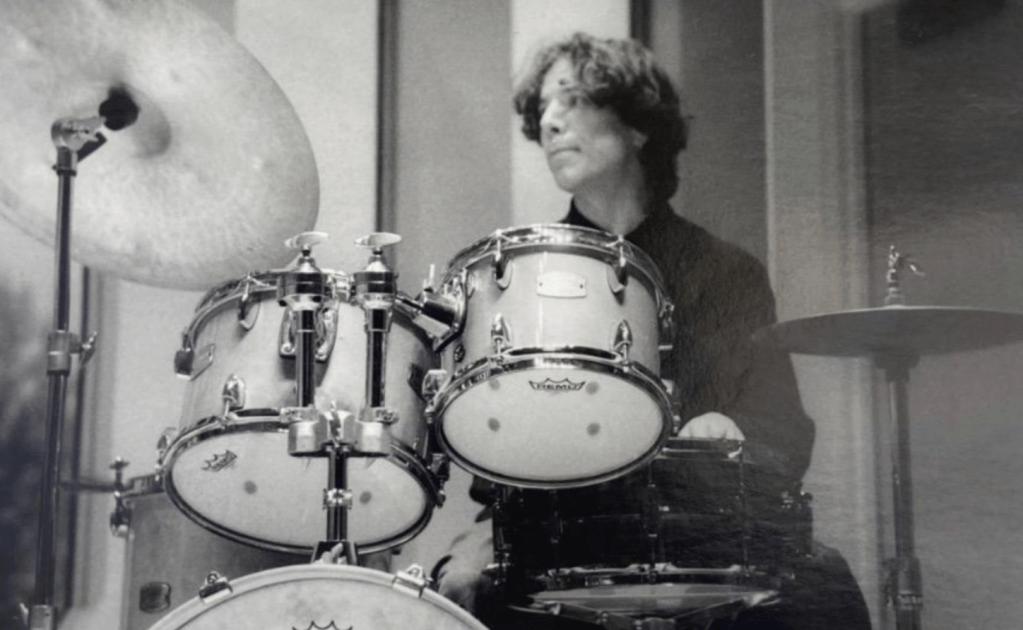
Max Simas is set to perform his senior recital on jazz drums on April 18th. On a cloudy Wednesday we found 30 minutes to sit down in the jazz building — a space that you don’t often leave all day once you enter — to reflect on the process of putting together a program. A veteran of the jazz department, Simas played in ten recitals last spring. To be that much in demand as a musician is a blessing and a curse, but has shaped his perception of what it takes to put on a great performance. “I’m able to view it more as a celebration, I don’t have as much to prove anymore” he said. His program consists of nine pieces, including works of Bud Powell, J Dilla, George Gershwin and more.
Recitals can seem like the deepest representation of a musician’s psyche, which is intimidating. “When I came here, I thought people spent lots of time figuring this out. I remember the junior recitals I heard as a freshman, they wrote these massive suites of music. Last year, about two days before my junior recital, I was so scared about my solos that I was playing drums all day. Those thoughts haven’t even entered my mind this year. I’m doing a little bit of everything that I love, and putting together a representation of the stuff that I’m passionate about.”
Simas grew up in a music loving family. His dad was into rock and roll and his brother, who was seven years older, began playing guitar at the same time. Simas picked up the drums at the age of six. His brother had an abandoned toy drumset that he liked to hit with pencils. He described him as having a big role in his improvement, inspiring him to catch up to his level even as a child. His passion for music kept him driven.
After a year in New York post high school graduation, he realised he was not prepared energy wise. He returned home to California for a while before being convinced by a close friend to consider Oberlin. “He was like, I will literally kill you if you don’t study with Billy Hart.”
The same friend took him to one of Hart’s shows in Oakland and introduced them. “So I just came, because energetically, Oberlin is the opposite of New York. It’s very calm.” Oberlin felt like a place he could focus considering a fleeting opportunity to study with a maestro of his instrument. “I just knew I wouldn’t be able to study with someone like that again.”
The conversation led swiftly back to program planning. Simas is excited for “a few tunes in a row that are all really hitting the nail on the head, in terms of what emotions I want to come across. One is Light Blue by Thelonious Monk, a beautiful ballad that also goes into swing, then it gets messy but it’s the same melody the whole time. It’s really gorgeous.” This will be followed by a Max Roach and Abbey Lincoln tune, Mendacity, into a J Dilla solo piece, and a Bill Frisell song with two guitars.
Simas was adamant about the order. “That sequence is what I wanted to do when I was a freshman but didn’t end up doing until now.” This order is reflective of how he has been feeling recently. With the current state of this country, he said “I’ve been thinking a lot about how jazz is really political music, and it’s been sterilised into an academic pursuit, not as much as a social activist sort of thing.” Simas isn’t claiming that he is making it about himself or has anything so inherently deep to declare, but he is aware of the weight this music carries, in relation to reflecting the current administration “and how f**ked it is.”
As the recital concludes, Simas will play an Ornette Coleman tune, What reason could I give. He describes it as an all encompassing emotional song that encapsulates the theme carried through the recital. “I want people to come and feel something, reflect on things and read between the lines. It’s not that subtle. It’s not just some out music, I hope it comes across as meaningful.”
In relation we discuss his most memorable Oberlin performances. One that immediately comes to mind is a performance at Finney Chapel, with professors Dan Wall and Gerald Cannon, alongside musical peer George Rogers. “I’m thinking about that now because Dan just passed. That was a super learning experience. I played horribly. I was out of my league, but that was very cool.”
This is only the beginning for Simas. His musical journey will continue at Julliard next year as a masters student. “I’m a little nervous, I feel very excited to meet and play with people that will surely be inspiring, and obviously to study with Kenny Washington.”
Although Simas’s life may begin to feel a little bigger he hopes he can retain the “Oberlin quality of curiosity.” But his journey here is far from an end, with a riveting musical program ahead of him. We conclude the conversation at around five thirty pm, setting Simas off to probably about five more rehearsals that day.


