
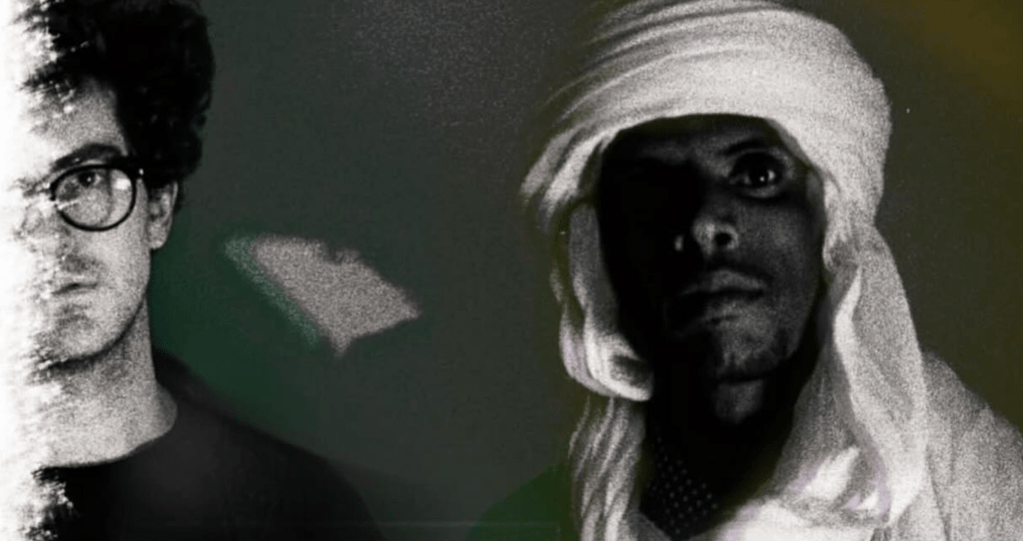
On Tuesday, March 10, two members of the trio TAKAAT — American bassist Mikey Coltun and Nigerien guitarist-singer Ahmoudou Madassane — held a workshop in Oberlin Conservatory’s TIMARA Gallery prior to their Modern Music Guild-sponsored show at the Dionysus Disco. TAKAAT was formed by the rhythm section of famed Nigerien guitarist, singer and songwriter Mdou Moctar. Coltun and Madassane have been extensively touring the United States, bringing their psychedelic blend of Tishoumaren and noise rock wherever they go.
The nomadic Tuareg people of the west-central Sahara have long used music to tell stories, accompany dances, share news, or celebrate weddings. Tuaregs have been involved in on-and-off rebellions and insurgencies against the repressive governments of Niger and Mali since the 1960s, leading many to spend time in exile in Libya or Algeria. During the 1970s and ’80s, it was in these Algerian refugee camps and Gaddafi-sponsored Libyan military units that many Tuaregs first had the opportunity to pick up the electric guitar.
Tuareg musicians easily adapted the musical language developed for instruments like the bowed, single-string imzad to the guitar, forming a new branch of their musical tradition in the process. This style of Tuareg guitar music, known as Tishoumaren or desert blues, took the trappings of Western rock music — guitars, drum kits, amplifiers, distortion — and applied it to the melodic, rhythmic and structural conventions of more traditional Tuareg styles. In the Nigerien city and Tuareg cultural capital of Agadez, musicians cut their teeth in wedding bands, playing loud, energetic sets that can last up to eight hours. For most Tishoumaren musicians, these wedding shows are their career and primary source of income.
Student openers F° (pronounced “faux” or “foe”) kicked the show off with a wave of amp feedback from guitarist Danilo Vujacic, as the rest of the members slowly developed a hypnotic groove around their feedback drone. The rest of F°’s 45-minute set was more straightforward indie rock, with singer-guitarist Francis Gallagher’s yearning vocals just charismatic enough to prevent their music from leaning too far into emo territory. The steady, uncomplicated interplay between Vujacic, Gallagher, and bassist Nicolas Wakeman left plenty of room for drummer Z Fluger to get intentionally loose with their playing or break into weird polyrhythms. F° closed the set in much the same way that they opened it, with Vujacic bent over their amplifier, hitting a drumstick against their strings as the rest of the band’s playing gradually grew more frantic and unpredictable before fizzling out entirely.
TAKAAT opened their set with a brief, prerecorded sound collage of human voices and radio static before striking a distortion-drenched unison chord. Backlit by a blindingly bright lightbulb lying on an imposing wall of amps, TAKAAT faced each other from across their pedalboards. Coltun’s sustained bass drone served as an unobtrusive backdrop for Madassane’s transfixing, freeform guitar shredding. Madassane typically plays second fiddle to Mdou Moctar, but when given the spotlight in TAKAAT, his playing is absolutely stunning.
TAKAAT alternated between more abstract songs, such as their first, and ones that featured groovy, syncopated drum machine tracks in 3/4, which served as a necessary though unfortunate substitute for the drive of a live drummer. Throughout the set, TAKAAT pummeled their audience with walls of fuzz, Coltun’s repetitive bass parts and ominous drones, and Madassane’s virtuosic, though never wanky, playing and volcanic guitar tone. I took the painfully bright light behind them as an invitation to close my eyes, lose my sense of place and let TAKAAT take me wherever the hell they were planning on going. If I ever get married, I know who I’m hiring as my wedding band.

 thecounterpoint.org