
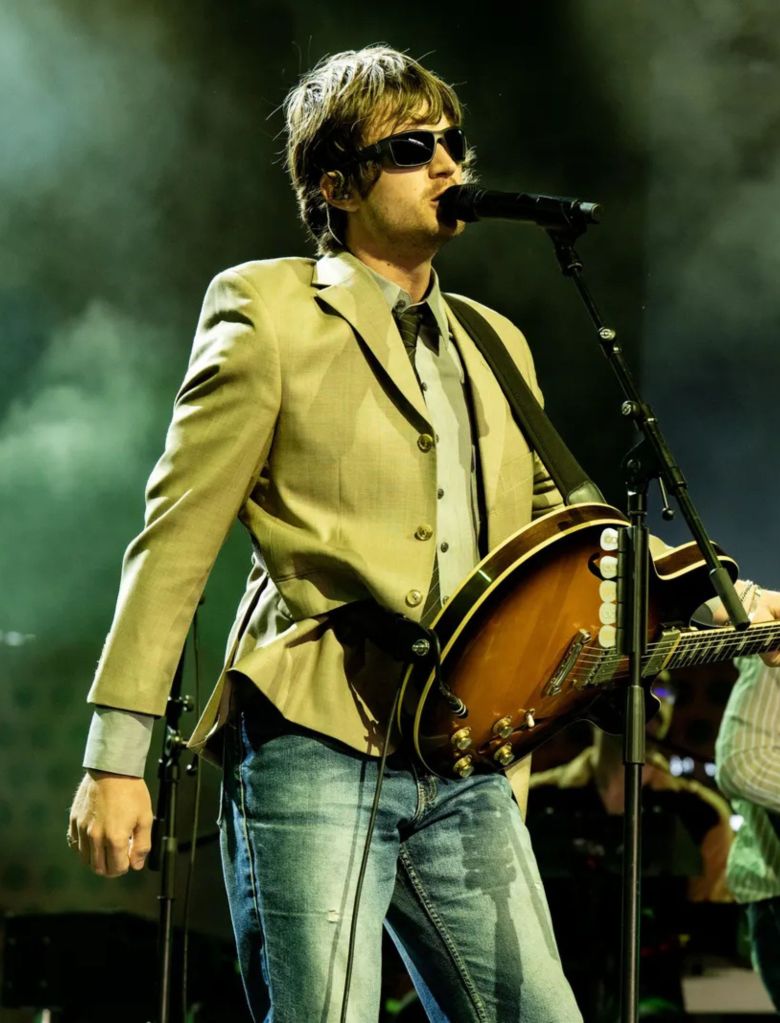
Did you know Steve Harrington records music? Wait, sorry, not Steve, the guy who plays Steve.
While known to most as the actor for jerk-turned-heartthrob Steve Harrington on the Netflix series “Stranger Things,” Joe Keery is known to those in the music scene as the cleverly-monikered Djo — pronounced “Joe.” Get it?
Keery has been quietly launching music since 2019 with his first single “Roddy,” but only broke into the mainstream in 2024 after a TikTok trend turned his two-year-old single “End of Beginning” into a popular audio.
Similar to his Netflix character, Keery’s music is from a previous era. His earlier two records, Twenty Twenty and Decide gravitate towards ‘80s synth beats and the psychedelic era of rock music. His third album, The Crux, released on April 4th, is no different. The twelve songs are like a toss-up between modern indie pop and ‘70s pop-rock — Mac DeMarco meets the Magical Mystery Tour, if you will.
The first half of the album leans indie-pop. Opening tracks “Lonesomeness Is A State of Mind” and “Basic Being Basic” thrive with upbeat punchy synths and twinkly leads. The song structure for the indie-pop songs tend to the standard verse-chorus type, which makes them very accessible to consumers of modern music. “Delete Ya” mimics the previous tracks but with a more melancholic aura that is marked by warm, woofy guitar lines. It feels like the reflective partner song to the rage in “Basic Being Basic.”
“Link” and “Potion” start to trickle in the absurdity of psychedelia through nonsensical yet charming lyrics such as “I’m looking for it in an alphabet soup cup / I’m looking under my thumb.”
The turning point for the album’s genre shift is “Egg,” which takes advantage of the verse-chorus structure to make creative production decisions without fully surrendering to the obscure novelty to come.
The psychedelic influence becomes cemented by the eighth track, “Charlie’s Garden,” whose piano synth ostinato screams influences of Electric Light Orchestra and the Beatles. The quirky brass interlude in the second half doesn’t help the Magical Mystery Tour allegations, either, feeling like a direct homage to “Penny Lane.”
The halo of Lennon-McCartney is seen still in “Golden Line” and the album’s concluding title track “The Crux.” The former sounds like a Paul McCartney crooning ballad in the family of “The Long and Winding Road” — so much so that Djo’s line delivery occasionally mimics his vocalisms. The church-like choir opening in “Back on You” also harkens back to McCartney, infusing ironic grandeur into the song’s driving bass and killer electric guitar solo.
In addition to the psychedelic yet indie-pop sound, something that characterizes Djo’s work is the varying audibility of the lyrics. This is because Djo seems to treat the voice — and by extension the lyrics — more like another instrument than a consistent focal point of each song.
“Link” uses a heavy echo-reverb filter that obscures the lyrics for almost all the choruses, and “Fly” mixes the voice track under a high-pass filter that effectively shapes the timbre, but at the expense of the words. Considering that he plays the role of both songwriter and producer (in addition to co-producer Adam Thein), it is likely he does this knowingly.
I feel that these choices are largely effective, especially given the genre that Keery is pulling inspiration from. One of the more interesting and unique aspects of psychedelia is the silliness of the lyric content that gets lost in the sound of the song itself. Listeners might not fully realize how silly the lyrics are on the first pass — lest we forget “I Am the Walrus.”
There are words, and we might not always know what they are or what they mean, but do we need to? It allows space to fall in love with the song for the song itself, not necessarily for what it is saying.
This feels apt for Keery, who mentioned once in an interview that shrouding his identity in early releases was on purpose — because he wanted people to fall in love with the music for the music itself, not because Steve Harrington was writing it.

 thecounterpoint.org