
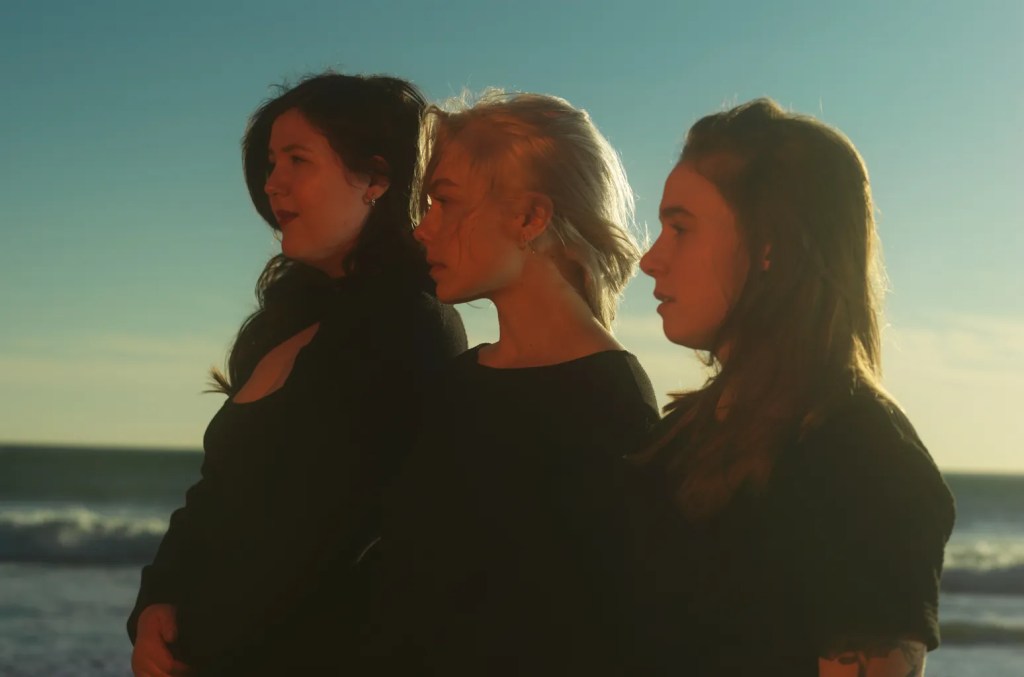
For the fortunate uninitiated, boygenius is an indie supergroup composed of, as fans lovingly call them, “the boys:” the ultrafamous Phoebe Bridgers and the less famous Lucy Dacus and Julien Baker (who both still have a lot of niche appeal). Each of them has their own musical style, but they all fall under that kind of breathy, folksy, singer-songwriter indie pop that’s hugely popular at the moment. In both their solo and group efforts, they’ve formed close parasocial bonds with fans through their heartfelt confessional songwriting, which largely deals with themes of identity and interpersonal relationships.
They’ve been hailed as outspokenly queer, “pro-woman” revolutionaries by mainstream media outlets and indie tastemakers alike: Rolling Stone called them “the world’s most exciting supergroup,” and Pitchfork has been pushing them hard since their debut album the record came out last year, which was crowned Best New Music at the time of its release with a generous 8.2/10 rating.
But I don’t buy any of it.
Boygenius isn’t revolutionizing anything. Their sound is nothing new and their outspoken queerness comes across as affected at best and borderline disrespectful at worst.
I admit: I like some of their music. Their 2018 self-titled EP is solid all the way through, with some of the most hard-hitting lyrics in all three band members’ catalogs combined. Here’s an example from the devastating “Me and My Dog:”
I wanna be emaciated
I wanna hear one song without thinking of you
I wish I was on a spaceship
Just me and my dog and an impossible view
Not only does the EP feature this kind of poignant lyricism, but it also sounds great. Nothing really technical or impressive, but certainly nice to listen to, with Dacus, Baker, and Bridgers’s pretty vocal harmonies and twinkly guitars.
The record is where things go downhill. The admittedly fantastic first single “$20” made me excited for the album’s release. The rest of the record, however, is nothing to write an op-ed about. Where was the interesting vocal interplay of that promising first single in the rest of their recording sessions? The texturally varied guitars, with the frenetic harmonics and building riffs? The variation in vocal techniques, the cathartic screaming that so effectively closes out the song? All that’s compelling about the record is concentrated in just that one track. There are a couple of other standouts like the dreamy, undeniably catchy “Not Strong Enough” and the tender, sparse “Cool About It,” but they lack the sonic intrigue of “$20.” And this time, the lyrics don’t save it.
If there’s one thing boygenius is guilty of in all of their endeavors — both in art and marketing — it’s pandering. The record’s “Satanist,” for example, is centered on leftist indie kid buzzwords. It first asks, “Will you be a Satanist with me?” Then, “Will you be an anarchist with me?” And finally, “Will you be a nihilist with me?” While I understand how these lines could be interpreted as poking fun at the zeitgeist of today’s youth culture, the unrelenting earnestness of the rest of their work leaves me with the conclusion that this use of buzzwords is unironic.
Satanism, nihilism, and anarchism are all belief systems that come up often in leftist (or left-leaning) Gen Z and cusper millennial discussions, both in ideological discourse and casual conversation. Their opposition to conventional neoliberal Western ideas is appealing to these groups of people, even when they have a limited understanding of what those words actually mean. Countercultural ideologies are especially appealing to the LGBTQ, and though this could just be my experience, these words have cropped up more than incidentally in the queer circles I’ve been in over the past few years.
Which is to say that boygenius is marketing to cool indie leftist kids — who are generally assumed to be queer. Their fanbase is largely queer young people, but more specifically queer young women who connect with them for their overt gayness. Commenters on this post in a fan subreddit say things like “They’re the queer representation I wish I had growing up,” and “they honestly represent hope to me, especially as a young queer teen.” Younger readers might have heard them referred to as “lesbian music,” or the more general, bi-inclusive “sapphic music.”
Queerness is at the forefront of boygenius’s overall brand and the main reason they’ve been talked so much about in recent years, but especially after the release of the record and their subsequent tour. Their concerts have gained notoriety for being Super Gay, with Baker, Bridgers, and Dacus making out with each other onstage and taking off their shirts to reveal their bare chests. An effusive Pitchfork article about their “big, emotional, gay-as-hell” show at Madison Square Garden praised them for being “aimed at the queer gaze, fiercely pro-woman but not in a performative, pussy hat kind of way.”
But how is being outwardly gay onstage not performative? They’re literally performing. Saying that boygenius is being performative in their onstage gayness isn’t saying that they aren’t gay — it’s saying that queerness itself is their brand. Which is a neutral statement in itself, but the problem lies in how it’s being marketed.
It’s not only media outlets that put boygenius on a revolutionary pedestal — they position themselves as being groundbreaking. In a particularly insufferable Them interview, Baker said, “If all the David Wojnarowiczes and Leslie Feinbergs of the world did all of that suffering for me not to live in a world where I can be so fucking gay on a big stage and have a whole bunch of other gay people here for me and it’d be joy, then it was in vain. The joy is the living amends that you do for your community as a performer.”
For the unfortunately uninitiated, Wojnarowicz was a radical gay activist, writer, and artist, whose work often featured powerful, graphic imagery that depicted the sheer ugliness of gay oppression during the AIDS crisis. Feinberg was a butch lesbian/transgender writer and activist, whose pivotal semi-autobiographical novel Stone Butch Blues is a touchstone of butch lesbian and transmasculine history. Saying that making out onstage is somehow amending the immense suffering of figures like Wojnarowicz and Feinberg is wildly self-important.
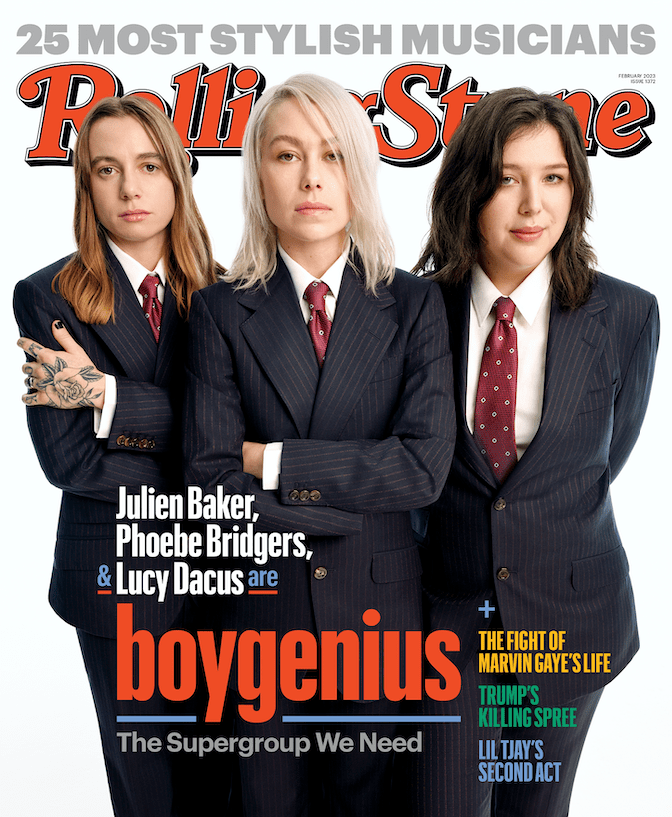
More specifically, Baker, Bridgers, and Dacus market themselves as revolutionary through their supposedly radical gender nonconformity. Their Rolling Stone cover story featured the band recreating the magazine’s iconic January 1994 Nirvana cover. The album artwork for their self-titled EP is a nod to Crosby, Stills & Nash’s self-titled debut. Even the name of their band is apparently an act of “subverting male hero worship” — one of many eye-rolling lines from their Rolling Stone profile.
But how does simply imitating iconic men lampoon the male-dominated rock scene? The same Rolling Stone article declares that Baker, Bridgers, and Dacus “just want to be treated like famous bands of dudes.” Their emulation of iconic male rockers isn’t a disruptive act of gender nonconformity. It’s playing into the same trends of male supremacy in the rock scene that have lasted far too long. Instead of trying to be treated like long-worshiped all-male rock bands, boygenius should be aiming to make the label of “girl band” less of a restrictive box. There have to be other ways to be cool and subversive as female rockers than merely dressing like Nirvana.
Boygenius isn’t entirely without merit. It’s great that so many queer young women seem to connect so deeply with their music and lyrics, and it’s encouraging to see the rock scene become decreasingly dominated by men. But boygenius is far from subversive. They’re three white, conventionally attractive, feminine-presenting women making compromising music, doing the bare minimum of gender nonconformity and gay activism. Yet they somehow have the nerve to pretend that their band is a bastion of radical, queer womanhood in the music scene.

 thecounterpoint.org